
The short answer
- California's construction toilet rule requires employee toilet facilities, with portable alternatives when sewer or water limitations prevent water closets.
- California's construction washing rule addresses washing stations separately; toilet selection alone does not settle washing arrangements.
- California's field sanitation rule distinguishes agricultural hand-labor operations from other agricultural work when specifying sanitation requirements.
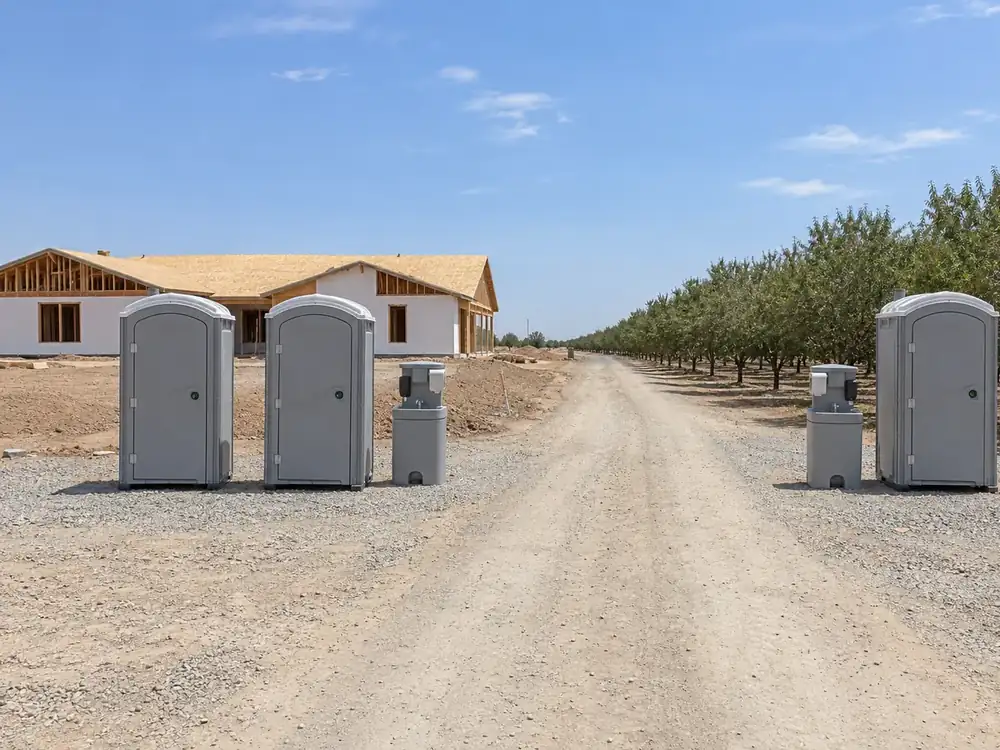
Construction and Field Work Need Different Sanitation Plans
Construction and agricultural sanitation rules address workers' access to facilities, while rental planning turns those requirements into a site arrangement. Start the call with the type of work, expected users and location. The employer's safety lead should address how the applicable rule applies to the job.
Construction Delivery Starts With Workforce and Washing Needs
Construction toilet planning begins with the employees using the site. Cal/OSHA section 1526 requires a separate toilet facility for each twenty employees or fraction of each sex, subject to its stated exceptions and conditions. For fewer than five employees, section 1526 allows a single all-gender, single-user toilet facility. The same construction rule provides for nonwater carriage facilities when sewer or water limitations make water closets infeasible, subject to local restrictions.
Washing needs a separate decision: section 1527 specifies a washing station for each twenty employees or fraction, along with water, cleansing supplies and drying provisions. For nonwater carriage toilets, section 1527 generally places the washing facility outside and unattached, with an inside-location exception for fewer than five employees when only a single toilet is provided. Discuss a separate wash stand rather than assume an attached sink settles the requirement.
For a tract-lot or remodel job, describe the gate, pad and equipment route. Select firm, level ground away from moving traffic, machinery, irrigation runoff and overhead lines. Reserve a clear walking route and truck approach before delivery. Tell the rental contact about work phases that could obstruct either route.
Farm Placement Follows the Working Area
Field sanitation planning follows the people doing the agricultural work. Section 3457 distinguishes agricultural hand labor from other agricultural operations. For covered hand labor, section 3457 requires toilets for each sex per twenty employees or fraction and a handwashing facility per twenty employees or fraction, subject to its exceptions.
Under section 3457, the walking limit is a quarter mile or five minutes, whichever is shorter; infeasible terrain calls for the point closest to vehicular access. For field sanitation toilet and hand wash rental, describe shifting work areas and farm-road access instead of planning only around the entrance. Put the proposed wash stand near the unit and discuss how the arrangement will follow the crew.
California and Federal Rules Have Distinct Details
California's provisions should be read directly when planning California work. The federal construction sanitation rule addresses employee toilets, drinking water and washing, including a mobile-crew toilet exception where transportation to nearby facilities is readily available. Do not substitute a federal table for the California text.
| Work setting | Rule to discuss with the safety lead | Rental planning detail |
|---|---|---|
| Construction job site | California construction toilets | Workforce and toilet arrangement |
| Construction washing | California washing facilities | Wash stand location and supplies |
| Agricultural field work | California field sanitation | Work area, walking route and changing crew locations |
| Federal construction reference | Federal sanitation text | The federal requirements and their stated exceptions |
Use and Service Visits Need an Active Site Contact
Keep the facilities reachable during work and tell your service pro when access or use changes. Leave positioning and any adjustment to your service pro, and keep everyone off the unit's exterior. Report a damaged door, unusable unit or obstructed route. Leave waste handling and pumping to the service pro, who arranges service visits.
For agricultural hand labor, section 3457 requires potable handwashing water, cleansing supplies, single-use towels and retention of service records for two years. Discuss documentation and supply responsibilities with the employer and service pro. The rule does not select a rental model or a universal visit schedule for the job; those decisions need the work pattern and site conditions.
Pick-up Planning Keeps Access Open Through Collection
Collection needs a usable route after the work area closes. Agree on gate access and the site contact, and tell your service pro about vehicles or materials that could block collection. One of our local portable restroom partners will discuss the rental scope and cost factors, including unit mix, duration, access and service arrangements. Ask the employer's safety lead or Cal/OSHA about uncertain rule applications while rental planning proceeds.