
The short answer
- Permit requirements depend on the jurisdiction, the proposed use and whether the unit would occupy private land or public space.
- Private property placement calls for the owner's permission and a discussion with the local planning or building office about applicable restrictions.
- Street, sidewalk and park locations need review by the office responsible for that space before delivery arrangements are settled.
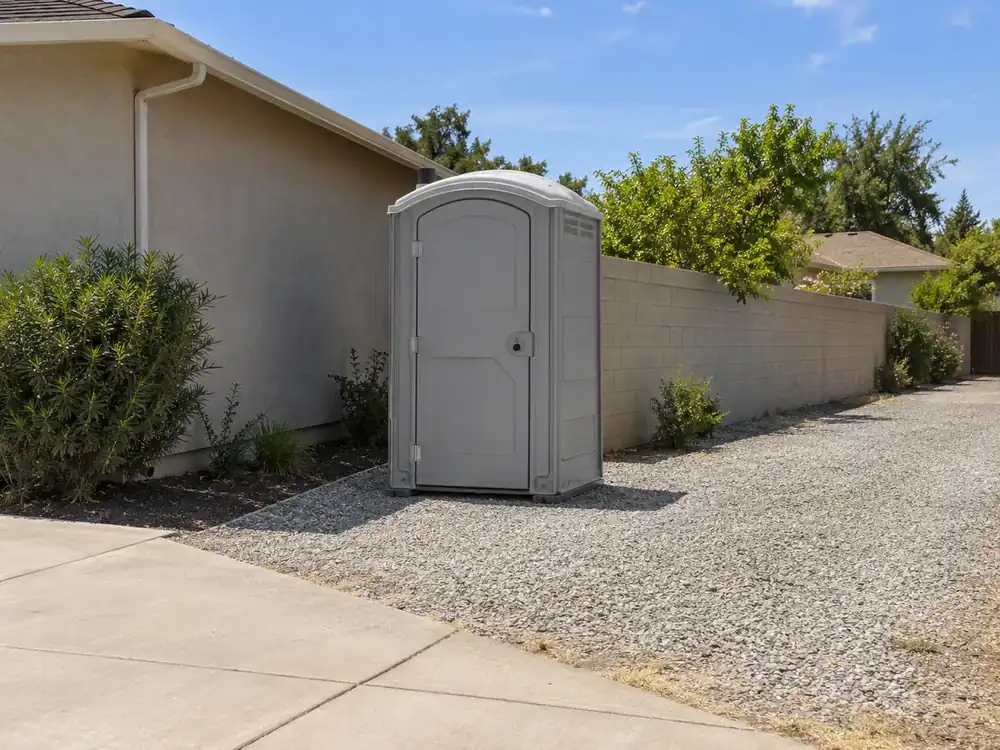
Property Permission and Access Shape the Placement Plan
The property boundary and intended use determine which placement questions to raise. Call with the location, rental dates and expected users; those details help shape the discussion while permission questions are being resolved. A backyard party, a remodel and a public gathering call for different conversations.
Delivery Starts With Permission for the Proposed Spot
Private land calls for the owner's agreement and a conversation about local restrictions. Describe the backyard, driveway, field or job site lot to the planning or building counter and ask whether a porta potty permit applies to the proposed use. Give a landlord or HOA the proposed position and rental dates where their rules apply. Owner permission alone should not be treated as permission to occupy adjoining public space.
Use the setting to choose the next contact:
| Proposed setting | Permission discussion | Placement detail to share |
|---|---|---|
| Backyard or driveway | Owner, landlord or HOA; local planning or building counter | Gate opening, house access and neighboring windows |
| Field or orchard | Landowner and the employer's safety lead | Work location, farm road and irrigation runoff |
| Construction lot | Site supervisor and the project's permitting office | Changing work areas and equipment routes |
| Public street or sidewalk | City street-use or encroachment office; county public works for county roads | Property boundary and proposed public-space occupation |
| Park or food event | Park manager, event office and county environmental health | Restroom location, wash stands and public walking routes |
Public Space Needs the Responsible Office's Review
Public space requires a discussion with the agency managing the proposed location. Modesto Land Development Engineering issues encroachment permits for work in the city's right-of-way; ask that office how the proposed restroom location would be handled. A porta potty street permit inquiry should describe the exact spot rather than assume the curb marks the property boundary.
For construction affecting county roads, Stanislaus County Public Works handles encroachment permits for construction activities in county rights-of-way. County road rules are separate from Modesto's city process. For an unincorporated location, identify the county office responsible for the land and the proposed activity.
Modesto's park rental instructions direct special events in reservable city parks to Recreation and a Special Event Park Rental Application. Ask about the restroom position as part of that discussion. For gatherings on or beside public property, consult Modesto's special-event requirements about the proposed activity. A youth sports league should discuss its park use with Recreation rather than assume another event's conditions apply.
Placement Must Leave Room for People and Trucks
Choose firm, level ground with a clear approach for delivery and later service visits. Keep the unit away from traffic, equipment, irrigation runoff and overhead lines. Leave doors, gates and walking routes open. Discuss a wash stand beside the restroom and the number of users during the rental call.
For vineyard portable toilet rental, describe where the crew works and how vehicles reach that area. At a ranch or barn wedding, describe the guest route as well as the truck route. Neighbors' doors, windows and shared driveways also belong in the placement discussion; ask the local office about any applicable setback instead of using a guessed distance.
Use and Service Visits Need Continued Access
The service route needs to stay open throughout the rental. Tell the site contact where trucks need access, and report a blocked gate, damaged unit or changing work area to your service pro. Guests and workers must leave the unit upright on its base exactly where it was set and stay off its exterior. Service visits are arranged by your service pro; leave waste handling and pumping to that professional.
Food service needs its own handwashing discussion. San Joaquin County Environmental Health's food program handles retail food permits and inspections in that county; ask the office about the proposed temporary food operation and its handwashing setup. A guest wash stand should not be assumed to settle food preparation requirements.
Pick-up Access Belongs in the Original Plan
Keep the agreed access route open until collection is complete. Discuss gate access, vehicles and the site's closing arrangements when scheduling pick-up. One of our local portable restroom partners will explain how location, unit choice, rental duration and planned service visits affect the scope and price before the rental is arranged. Permission discussions can continue alongside that planning.