
The short answer
- Unit type and quantity are main rental cost factors because standard units, accessible units and restroom trailers require different plans.
- Rental duration and the service visit plan depend on the dates and the people using the facilities.
- Delivery distance, truck access and relocations affect the work needed to place units and collect them.
The Rental Details That Shape Cost
Rental cost follows the unit mix, site conditions and work needed during the rental. Call while the plan is taking shape; discuss the address, expected users and dates during the conversation. A price tied to your project needs those details because a short event and a continuing crew account involve different placement and service plans.
Unit Mix and Headcount
Portable restroom rental cost changes with the facilities being planned and the people using them. Discuss standard units, accessible units, units with sinks, separate wash stands and restroom trailers. A wash stand beside the toilets belongs in the initial layout rather than being left for the day people arrive.
Tell your service pro whether the users are a tract-lot crew, orchard workers, wedding guests or a youth sports league. Include overlapping shifts and periods when guests will use the facilities together. For construction work, Cal/OSHA section 1526 sets toilet requirements around employee numbers and sex, with exceptions specified in the rule.
Delivery Routes and Placement
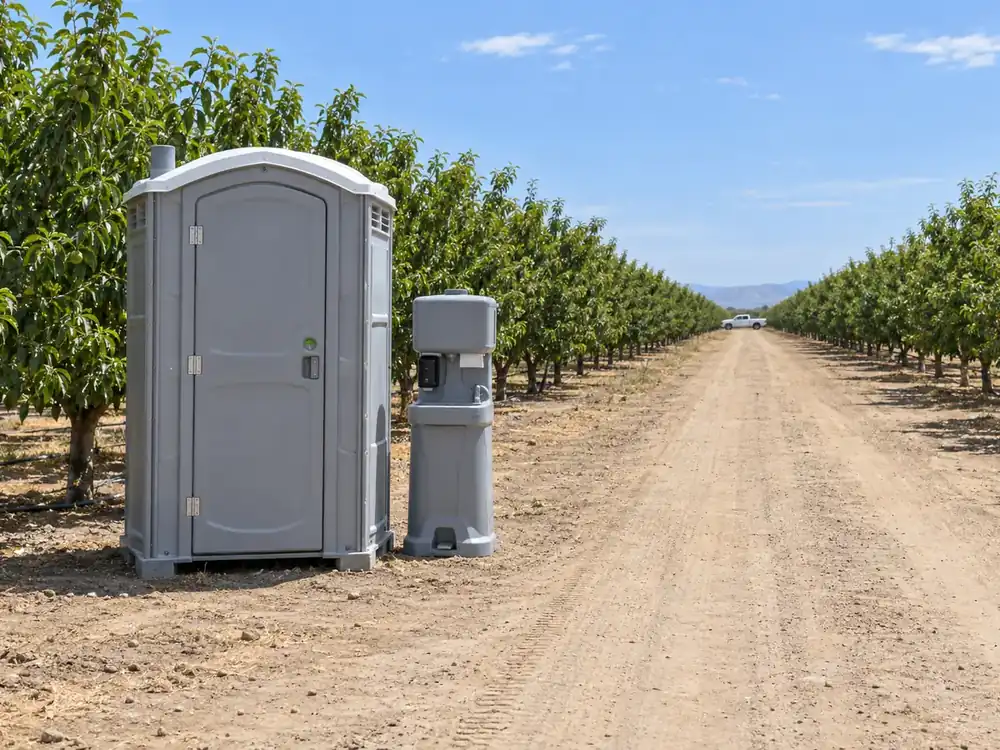
Delivery distance and truck access affect the placement plan. Explain narrow gates, loading traffic, soft ground, slopes and farm-road conditions during the call. Dust matters to the access discussion when the proposed spot is reached along an unpaved road.
Choose firm, level ground and discuss an alternative spot when the proposed pad is soft or sloped. Keep units away from equipment routes, traffic, irrigation runoff and overhead lines. Your delivery pro reviews the usable placement area with you; the pad also needs room for the planned wash stand and a clear approach for users.
| Rental detail | Planning question |
|---|---|
| Unit type and headcount | Which facilities suit the users at each location? |
| Pad and approach | Where is firm, level ground with an open user route? |
| Delivery and service access | Which gate and road can the service pro use? |
| Dates and duration | When does use start, change and finish? |
| Service visits | How will use and access affect the visit plan? |
| Relocation or additions | Which work areas or attendance changes need discussion? |
Rental Dates and Service Visits
Duration and expected use shape porta potty rental prices. Share the full rental period, including setup and the end of use. For a weekend or holiday event, discuss the event dates and site access through removal when arranging the rental.
Your service pro plans the visits for the rental period. Tell them when shifts expand, attendance changes or a field crew moves to another block. For agricultural field work, Cal/OSHA section 3457 requires toilet and handwashing facilities to be located near each other. Discuss both facilities whenever the working area changes.
Changes and Final Pick-up
Units added or relocated during use can change the rental scope. Contact your service pro about the new headcount or working area rather than moving a unit yourself. Keep the unit upright on its base where it was placed and keep people off its walls and roof; arrange service visits through your service pro.
Agree on the rental end date and keep the access gate, road and path clear for collection. Share changes to the site layout so stored materials do not block the removal route.
Scope and Price Before Placement
Your site, headcount and dates give a local portable restroom partner in our network the details needed to explain the scope and price before units are set. Ask which planned units, service visits, access arrangements and removal details the rental covers. A porta john rental price should relate to those agreed details, with additions and date changes discussed when they arise.